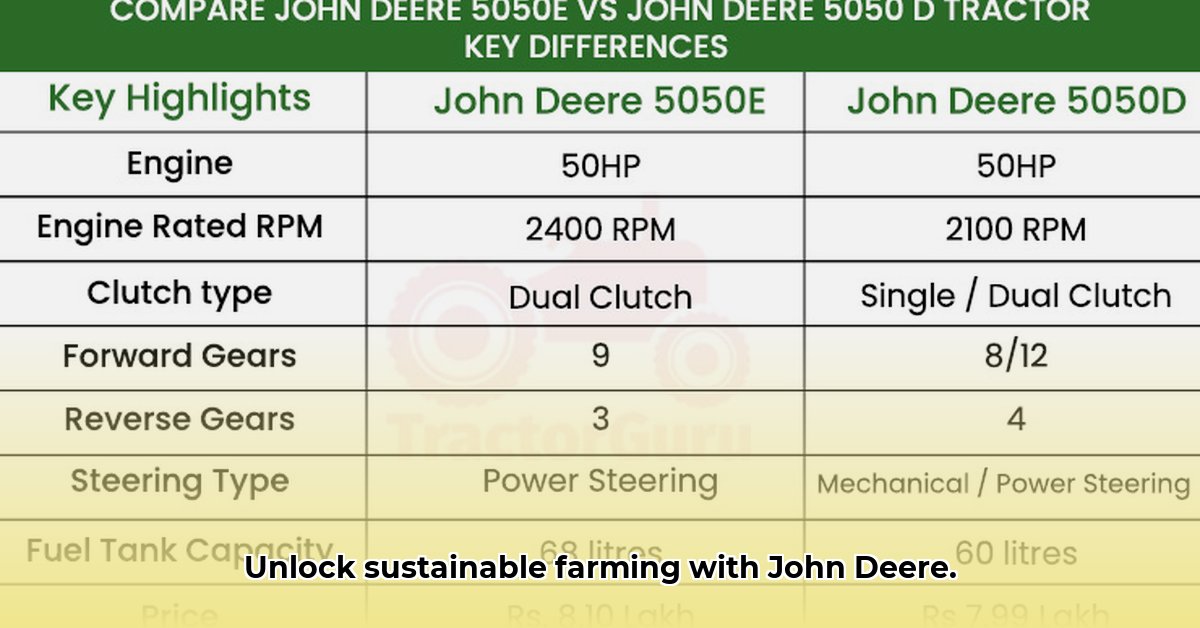
Choosing the right tractor is crucial for sustainable farming. This guide focuses on John Deere models, comparing key specifications to help you select a machine that balances efficiency, environmental impact, and cost-effectiveness. We'll examine fuel efficiency, emissions, precision farming capabilities, and more, providing a data-driven approach to inform your decision. How can you optimize your farm's sustainability through tractor selection? Read on to find out. For more information on John Deere tractors, check out this helpful resource.
John Deere Tractor Model Comparison for Sustainable Agriculture
The following chart compares several John Deere tractor models, highlighting features crucial for environmentally conscious farming. Remember, these figures are approximations. Always consult your local John Deere dealer for precise specifications based on model year and configuration.
| Model | Engine Horsepower | Fuel Efficiency (approx. gal/acre) | Emission Standard | PTO Horsepower | GPS Guidance | Auto-Steer | Variable Rate Technology | Payload Capacity (lbs) (approx.) | Estimated Purchase Price (USD) (approx.) |
|---|---|---|---|---|---|---|---|---|---|
| 5E Series | 70-100 | Varies greatly by task and model | Tier 4 Final | 54-75 | Optional | Optional | Optional | Varies greatly by model | $50,000 - $80,000 |
| 6 Series | 115-210 | Varies greatly by task and model | Tier 4 Final | 85-165 | Standard | Optional | Standard | Varies greatly by model | $80,000 - $150,000 |
| 7R Series | 210-370 | Varies greatly by task and model | Tier 4 Final | 165-290 | Standard | Standard | Standard | Varies greatly by model | $150,000 - $300,000 |
| 8R Series | 310-410 | Varies greatly by task and model | Tier 4 Final | 240-320 | Standard | Standard | Standard | Varies greatly by model | $250,000 - $400,000+ |
Important Note: Fuel efficiency varies widely depending on tasks, soil conditions, operator skill, and weather. Similarly, payload capacity and purchase price are highly dependent on the specific configuration. Consult detailed specifications from the manufacturer for accurate figures.
Understanding the Sustainability Implications
Let's delve into how the specifications impact sustainable farming practices. The environmental and economic benefits of sustainable agriculture are significant. Are you maximizing these advantages with your tractor choices?
Fuel Efficiency: The Economics of Sustainability
Lower fuel consumption (gallons per acre) directly translates to reduced operating costs and a smaller carbon footprint. Efficient engine design is key, exceeding mere horsepower considerations. How much money could you save annually by choosing a more fuel-efficient model?
Emission Standards: Cleaner Air, Healthier Planet
Emission standards (Tier 4 Final) indicate reduced greenhouse gas emissions. This commitment to cleaner air is vital for environmental stewardship and public health. What are the long-term environmental gains from prioritizing lower emission tractors?
Precision Farming Technologies: Reducing Waste, Optimizing Resources
GPS guidance, auto-steer, and variable rate technology minimize input waste (fertilizers, pesticides) while maximizing yields. This precision translates into both cost savings and environmental protection. How does precision technology directly impact cost reduction and minimize environmental impact?
Choosing the Right Tractor: A Practical Guide
Selecting a tractor involves careful consideration of several factors. Follow this step-by-step approach to make an informed decision.
Step 1: Define Your Budget: Account for the initial purchase price, fuel, maintenance, and repairs over the tractor's lifespan.
Step 2: Evaluate Farm Needs: Consider farm size, crops, and regular tasks. Larger, more diverse operations generally require more powerful and versatile tractors.
Step 3: Prioritize Sustainability Goals: Determine your primary goals – fuel efficiency, emissions reduction, or maximized precision farming capabilities.
Step 4: Assess Implement Compatibility: Ensure the tractor is compatible with your current and planned equipment.
Step 5: Compare and Select: Use the comparison chart and your prioritized needs to select the most suitable tractor. Consult with your local John Deere dealer for personalized guidance.
The Future of Sustainable Tractors
Ongoing research is leading to advancements in sustainable agricultural machinery. Expect further improvements in fuel efficiency, emissions reduction, and even more advanced precision farming technologies. Staying informed about these developments will help you make the most environmentally responsible choices for your farm for years to come.